A bite from a plate may look harmless, but some everyday foods can seriously affect a pet’s body. What food is dangerous for pets to eat? The answer depends on the food, the amount, and the animal’s species, size, and health. Chocolate and coffee contain stimulants that can harm dogs and cats. Grapes and raisins may cause kidney injury in dogs, while onions and garlic can damage red blood cells. Products containing xylitol can trigger a dangerous drop in blood sugar in dogs. Alcohol and macadamia nuts are also risky. Small amounts matter.
Food-related poisoning does not always cause immediate, obvious signs. A dog may vomit, become restless, or seem weak; a cat may hide or stop eating. Signs vary, and some problems take time to appear. A pet’s apparent recovery is not always reassuring. No checklist covers every food, species, or individual reaction, so online lists cannot replace veterinary advice. That uncertainty deserves attention.
If you think your pet ate something unsafe, note the food, estimated amount, time, and your pet’s weight. Keep the packaging if available, and contact a veterinarian promptly for guidance. Do not wait for symptoms, and do not try to make your pet vomit unless a veterinary professional instructs you to. Details help. Knowing common hazards can prevent a frightening emergency, but asking for qualified advice is the safer choice when exposure is possible.
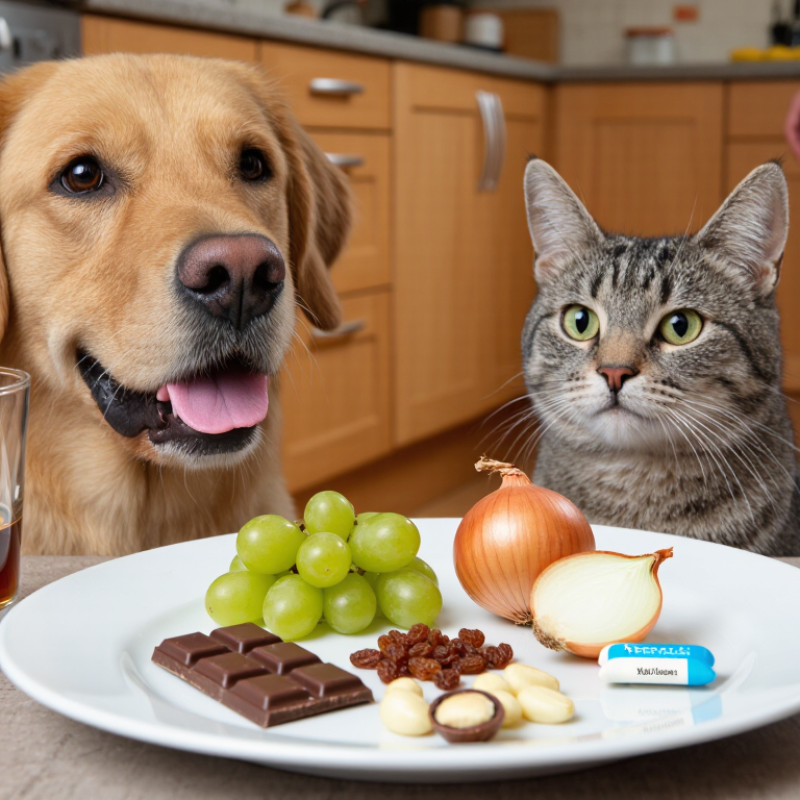
Pets do not process food exactly like smaller humans. Their digestive systems vary by species, size, age, and health. Dogs can digest many familiar foods, but that does not make every human meal safe. Cats have different nutritional needs and rely more heavily on nutrients found in animal tissue. One bowl can affect each animal differently.
Digestion starts differently, too. Humans begin breaking down starches in the mouth, while dogs rely more on enzymes produced later in digestion. Pets also differ in how their livers process certain chemicals. Chocolate contains theobromine and caffeine, which dogs clear slowly; even modest amounts may cause serious illness, especially in a small dog. Grapes can also trigger kidney injury in some dogs, though the reason and risk are not fully predictable. That matters. A food’s danger is not always obvious from its smell, taste, or texture.
Portion size complicates things. A small bite for a person may be a large dose for a tiny pet, and an animal’s medical history can change the risk. It is tempting to assume that a food is harmless because a pet ate it once without trouble. That is not a reliable test. If a pet eats something potentially harmful, note the food, amount, and time, then contact a veterinarian promptly. Guessing based on human digestion can waste precious time.
Pets process many substances differently from people. A food that is harmless to a human can cause poisoning or serious illness in a dog or cat. Risk depends on the animal, the amount eaten, and the specific product.
| Food or substance | Why pets may be affected differently | Pets at risk and possible effects | Practical guidance |
|---|---|---|---|
| Chocolate and cocoa | Chocolate contains theobromine and caffeine. Dogs clear these stimulants more slowly than people, so they can build up to harmful levels. | Dogs are commonly affected; cats can also be poisoned. Signs may include vomiting, restlessness, a fast or irregular heartbeat, tremors, and seizures. Dark chocolate and cocoa powder generally contain more theobromine than milk chocolate. | Keep all chocolate away from pets. Contact a veterinarian promptly if any amount is eaten; do not wait for symptoms. |
| Grapes and raisins | The exact toxic mechanism is not fully understood, and sensitivity varies. A reliably safe amount for dogs has not been established. | Dogs can develop acute kidney injury, sometimes after eating a relatively small amount. Evidence of toxicity in cats is less clear, but these foods should still be kept away from pets. | Treat any dog exposure as urgent and call a veterinarian or animal poison service. Do not try to induce vomiting unless instructed by a professional. |
| Xylitol | In dogs, xylitol can trigger a rapid insulin release. This response differs from the way the sweetener affects people and may cause blood sugar to fall dangerously low. | Dogs may develop weakness, vomiting, poor coordination, seizures, or liver injury. Effects in cats are less well documented, so products containing xylitol should be kept away from all pets. | Check ingredient labels on sugar-free products. If a pet eats xylitol, seek veterinary advice immediately and bring the packaging if possible. |
| Onions, garlic, leeks, and chives | These alliums contain compounds that can damage red blood cells in pets. Cooking, drying, or processing does not reliably make them safe. | Dogs and cats can be affected. Possible signs include vomiting and weakness; anemia may develop later. Cats are particularly sensitive to allium-related red blood cell damage. | Avoid feeding allium-containing foods, including sauces and seasonings. Contact a veterinarian after a known or suspected ingestion. |
| Caffeine | Pets are smaller than most people and can be more vulnerable to the stimulant effects of caffeine relative to the amount consumed. | Dogs and cats may show agitation, vomiting, a rapid heartbeat, tremors, or seizures. Coffee grounds, tea, energy products, and caffeine tablets can be concentrated sources. | Keep caffeinated drinks and products out of reach. Call a veterinarian if a pet consumes them, especially if the amount or strength is uncertain. |
| Alcohol and raw yeast dough | Pets can be affected by alcohol at smaller absolute amounts. Raw yeast dough can expand in the warm stomach and produce ethanol as it ferments. | Dogs and cats may develop vomiting, disorientation, low body temperature, low blood sugar, or breathing problems. Dough expansion can also cause painful stomach distension. | Keep alcoholic drinks and uncooked dough secured. Contact a veterinarian immediately after ingestion; raw dough exposure is an emergency. |
| Macadamia nuts | The cause of macadamia toxicity is not known, and dogs can develop illness even though the nuts are a familiar human food. | Dogs may experience weakness, vomiting, tremors, or difficulty walking. The effect is usually temporary, but veterinary guidance is still appropriate. | Do not offer macadamia nuts or foods containing them. Call a veterinarian if a dog eats any, particularly if symptoms appear. |
| Milk and dairy products | Many adult cats and some dogs produce less lactase, the enzyme needed to digest lactose, than young animals do. This is a digestive intolerance, not usually a toxin exposure. | Sensitive pets may develop diarrhea, gas, or stomach discomfort. Tolerance varies, and high-fat dairy can also upset digestion. | Avoid using milk as a routine treat. If a pet develops persistent diarrhea, vomiting, or discomfort, contact a veterinarian. |
Important: This table is general information, not a diagnosis. If a pet eats a potentially harmful food, contact a veterinarian or animal poison service promptly. Be ready to share the pet’s species, weight, the food involved, the estimated amount, and when it was eaten.
Chocolate, coffee, grapes, raisins, onions, garlic, macadamia nuts, and some sugar-free products can be dangerous. Check sauces and snack labels, too.
Chocolate contains stimulants that pets process slowly. These can affect the heart and nervous system. Darker chocolate generally poses greater risk.
No reliable safe amount is established. Even small amounts have been linked to kidney injury in dogs.
Xylitol may cause blood sugar to drop quickly and can harm the liver at higher doses. Check sugar-free product ingredients.
Yes. Fresh, cooked, and powdered forms can damage red blood cells in dogs and cats. Small traces may be easy to miss.
Contact a veterinarian or emergency animal clinic promptly. Note the food, estimated amount, and time eaten. Keep the packaging nearby.
No, unless a veterinary professional specifically directs you. Milk, oil, salt, and other remedies may cause further harm.
Trouble breathing, seizures, collapse, or unusual weakness require immediate attention. Call ahead if possible. Don’t wait for symptoms.
Pets do not digest food exactly as humans do, and some ingredients that are safe for people can upset or poison an animal. What food is dangerous for pets to eat depends partly on the species, but common risks include chocolate, grapes and raisins, onions, garlic, alcohol, caffeine, and products containing certain sweeteners. These foods can affect the nervous system, blood cells, heart, kidneys, or digestive tract, causing symptoms such as vomiting, weakness, tremors, or difficulty breathing.
The severity of food poisoning varies with the food, the amount eaten, the pet’s size and health, and how quickly help is given. If you think your pet has eaten something harmful, remove any remaining food and contact a veterinarian promptly. Share what was eaten, how much, and when, and describe any symptoms. Do not wait for signs to appear or try to make your pet vomit unless a veterinary professional specifically advises you to do so.

 Mels Pet